
Skip to content
All services

SOC Use Case Review

A busy alert queue can still leave important activity unseen. We look at the rules that fire, the logs behind them and the systems they are meant to protect. You receive a practical list of tuning and coverage work.

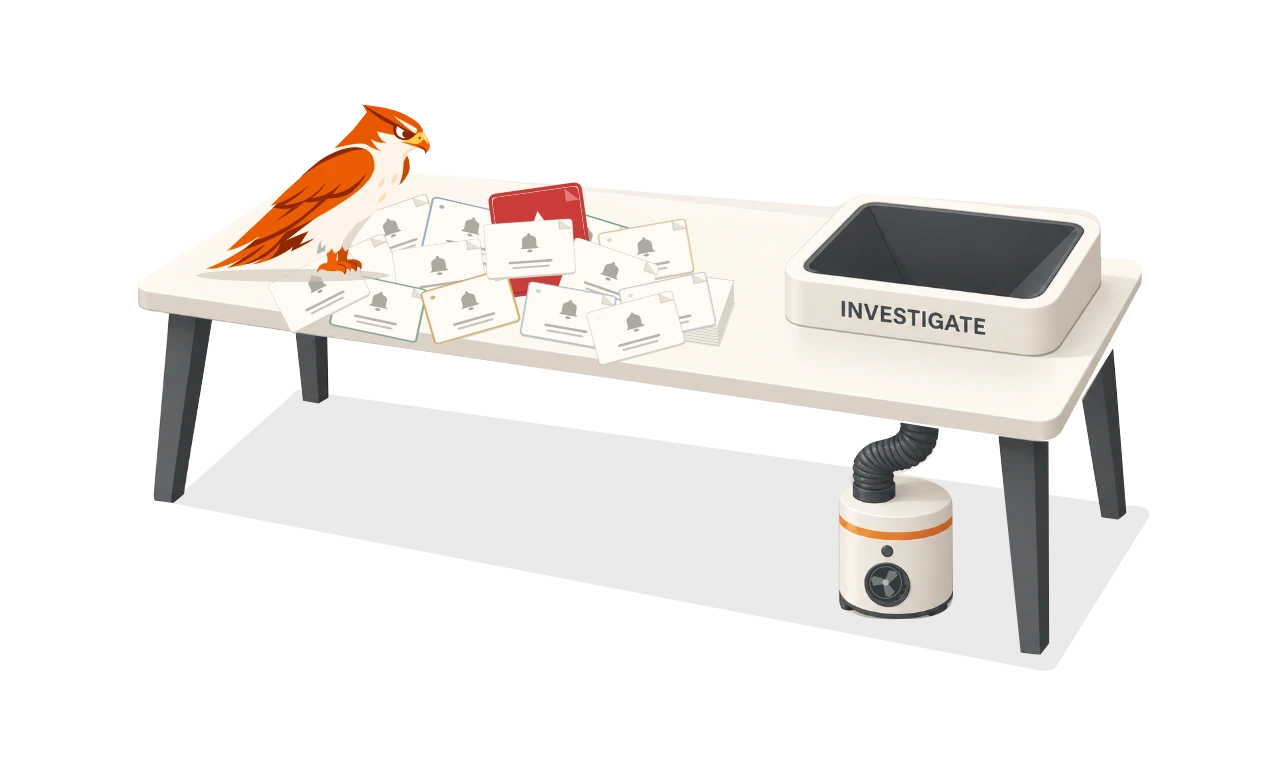
The eagle separates an important alert from repeated notifications and investigates it.

Who this is for

Security teams dealing with repeat false positives or unable to show that important systems have dependable monitoring coverage.

  • Your analysts spend much of the day closing the same alerts.
  • You cannot say with confidence which critical systems have a working detection.
  • Your SIEM has grown over time and nobody owns the rule set.
Common scenarioAnalysts spend much of the day closing repeat alerts, but nobody can give a confident answer when leadership asks whether a critical service is properly monitored.
Alert feed12 today
HIGHBrute force login: DC01
MEDFailed MFA: svc_backupnoise
HIGHLateral movement: WKSTN-14
LOWPort scan: 198.51.100.0/24noise
CRITKerberoasting: krbtgt
MEDDNS tunnel: ns3.cdn-edge.examplenoise

What the evidence says

Independent findings from the last year, with the report each one comes from.

  • 14 daysmedian time attackers went unnoticedSource: Mandiant
  • 20%of teams see false positives very frequentlySource: SANS

What the evidence says

Independent findings from the last year, with the report each one comes from.

Nearly half of intrusions are first spotted by an outsider

52%

of intrusions were first detected by the organisation itself rather than by an outside party, up from 43% the year before. The median time an attacker went unnoticed was 14 days.

37%202246%202343%202452%2025
Intrusions first detected internally, by year of investigation

This is why the review starts from your critical systems and checks whether a detection would actually fire for each one.

False positives are the biggest drag on detection teams

60%

of security teams encounter false positives frequently or very frequently, and the share seeing them very frequently rose from 13% to 20% in a year. False positives remain the leading operational burden.

Teams seeing false positives in more than 80% of alerts

This is why retiring and tuning rules is as much of the deliverable as proposing new ones.

Breaches still take most of a year to identify and contain

241 daysDown 17 days on the previous year

was the average time to identify and contain a breach. Organisations that found the breach themselves saved around $900,000 compared with those told by the attacker.

241 of 365 days
About two thirds of a year from intrusion to containment

This is why every use case is tied to a system, a log source and an owner, so the alert exists when it counts.

How the engagement runs

  1. Identify the important systems

    Agree which assets, data stores and services need the strongest monitoring coverage.

  2. Read the current rules

    Check what each active use case detects, how often it fires and whether an analyst can act on the signal.

  3. Check the source data

    Confirm that the required logs arrive in the SIEM and that important fields are parsed correctly.

  4. Exercise relevant scenarios

    Test coverage against MITRE ATT&CK techniques that apply to your environment.

  5. Agree the changes

    Review the tuning, new rules and logging work with the people who will implement them.

Detect
Alert
Log
Respond
Network
Identity
Endpoint
Cloud
Application
Data
Covered Gap found

Why we work this way

  • Volume can hide weak coverage

    A large queue may look busy while useful signals are buried under repeat alerts and alerts with little value.

  • We start from what matters to you

    We go through your critical assets and your AWS or Azure environment with you, agree who should touch them and how, then write use cases that fire only when something touches them another way, such as customer data in an S3 bucket read by anything other than the one role built for it.

  • Rules outlive their original context

    Old services disappear, new ones arrive and a once useful rule can become noise. Periodic review keeps the rule set relevant.

A use case built around your assetAWS example
FinanceReportsRolethe reporting jobcustomer-datacritical S3 bucketAdminBreakGlassRolenot approved for this dataCloudTrailevery read is checkedGetObject approvedGetObject not the approved role
09:12FinanceReportsRoleGetObject customer-dataexpected
09:14FinanceReportsRoleGetObject customer-dataexpected
09:20FinanceReportsRoleListBucket customer-dataexpected
09:31AdminBreakGlassRoleGetObject customer-datanot the approved role
HighCustomer data read outside the approved role

What you receive

A detection health report that lists the tuning changes, proposed use cases and logging work in priority order, with a coverage matrix for your critical systems and each tuned query carrying the exclusions specific to your environment.

  • Review of active detection use cases and alert rules
  • Mapping of critical systems to current monitoring coverage
  • Checks for missing or poorly parsed log sources
  • New use case proposals for unmonitored attack paths
  • Prioritised recommendations for rule tuning and logging changes
  • Tuned queries with exclusions specific to your environment, such as scanner ranges and known service accounts

Sample report, fictional client

Cover1 / 5
Pages in this sample

Why choose us for this work

  • Operational SOC experience

    Our consultants have built and tuned detection programmes in regulated environments.

  • Testing informs detection

    Offensive testing experience helps us choose relevant techniques and test whether the expected evidence appears.

  • One consultant owns the review

    The person reading the rules also presents the findings and answers the implementation questions.

Planning this work?

Talk to our team about SOC Use Case Review

Book a consultation